It's not the tax breaks. Here's the real reason for India's hybrid boom
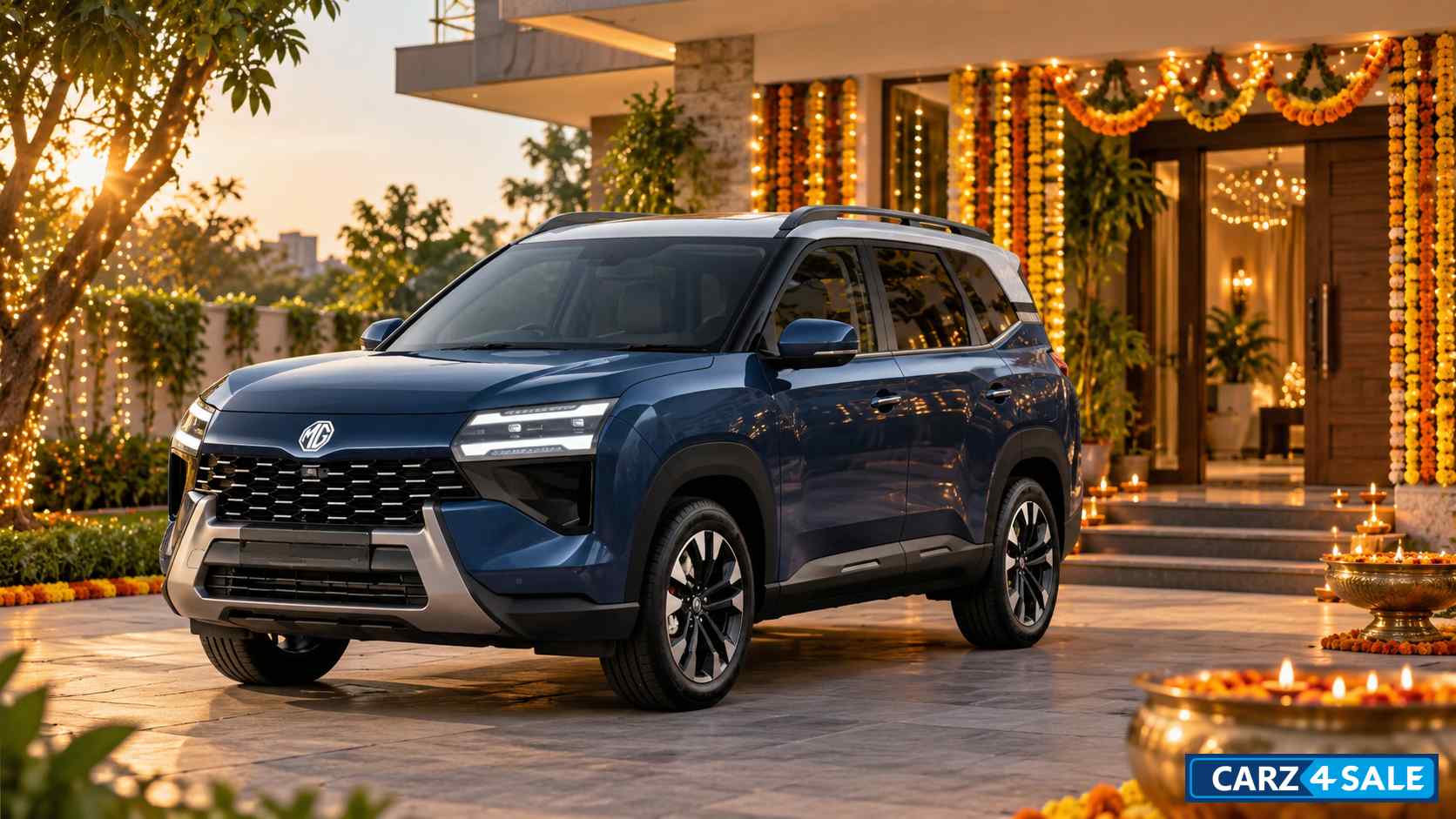
Walk into almost any Indian showroom this festive season and you'll notice the same pattern repeating across brands. Kia just launched its first hybrid SUV. Honda's newest flagship runs on a strong-hybrid engine. MG's newest SUV comes as a plug-in hybrid. Renault's comeback SUV is getting a hybrid variant before Diwali. Even Toyota and Maruti Suzuki — who've quietly sold hybrids for years — are leaning harder into the technology than ever before.
This isn't a coincidence, and it isn't just a festive-season marketing push. It's the clearest sign yet of where India's car industry is actually headed — and it's not quite where anyone expected two years ago.
The timing makes sense on the surface: festive season is when Indian automakers launch their biggest, most important products of the year, because that's when buyers are actually ready to spend. But the choice of powertrain is the real story. A few years ago, the assumption was that festive season 2026 would be dominated by electric vehicle launches. Instead, it's shaping up to be the year hybrids went mainstream — hitting midsize SUVs, premium SUVs, and even three-row family SUVs that never had electrified options before.
To understand why, you have to look past the showroom floor and into two things most buyers never think about: India's charging network, and its tax code.
Here's what surprises most people. Electric vehicles in India are taxed at a concessional 5% GST with no compensation cess. Hybrids get no such benefit — under the GST 2.0 restructuring, most hybrid SUVs fall into the same high-tax bracket as regular petrol and diesel vehicles, with larger hybrids taxed as high as 40% including cess. In other words, a hybrid SUV in India currently costs the manufacturer (and the buyer) roughly the same in tax as a plain petrol one, despite burning far less fuel and emitting far less carbon.
This has actually become a point of frustration within the industry. India's road transport minister has publicly pushed for a reduced 12% GST slab specifically for hybrids, and several states have separately begun offering road tax waivers to nudge things along. But as things stand in September 2026, hybrids are selling in huge numbers despite the tax system, not because of it — which makes the current festive-season boom even more telling about what buyers actually want.
If hybrids aren't winning on tax, they're winning on something far more practical: they solve the one problem electric vehicles in India haven't solved yet — range anxiety.
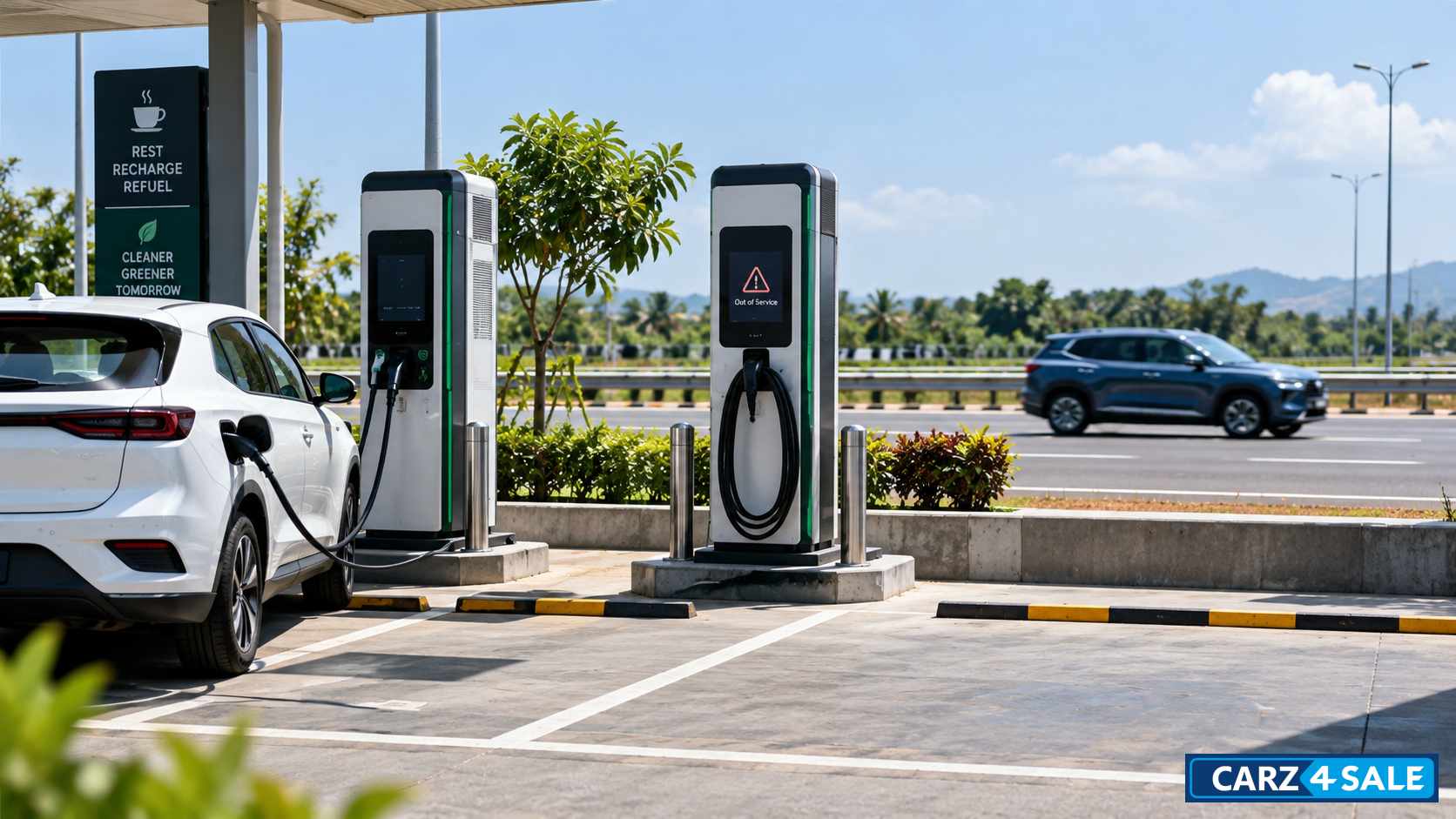
India currently has roughly 28,000 public charging points for a fast-growing EV fleet, which works out to one charger for every 235-odd electric vehicles on the road — well below what markets like China or the US manage. Independent surveys back up what that shortage actually feels like for buyers: close to 9 in 10 prospective EV buyers say they're anxious about finding a working charger when they need one, and roughly 4 in 10 point directly to a lack of public chargers as their biggest reason for hesitating on an EV purchase.
A hybrid sidesteps that problem entirely. You get an electric motor for smooth, silent, fuel-sipping city driving, and a petrol engine that takes over the moment you point the car toward a highway or a hill station — no planning required, no apps, no waiting at a charger that may or may not be working. For a country where long family road trips during festival season are practically a tradition, that's not a small selling point. It's arguably the whole pitch.
There's also a business-strategy angle that rarely makes it into showroom conversations. Global automakers invested heavily in electric vehicle platforms over the last five years, expecting EV adoption curves in India to mirror what happened in China and parts of Europe. That hasn't happened at the pace anyone predicted — EVs still make up a small single-digit share of India's overall car market.
Executives have started saying this out loud. One major automaker's India CEO recently put it bluntly: the industry isn't in an "EV emergency," and predicted hybrids will actually overtake electric vehicles in market share by the early 2030s, even as EV adoption continues to grow in absolute terms. That's a significant shift in tone from just a couple of years ago, and it explains why so many brands are now filling out their SUV lineups with hybrid and plug-in hybrid options rather than betting everything on battery-electric models alone.
There's a regulatory push behind this too. India's fuel-efficiency norms are getting stricter, and hybrids offer automakers one of the fastest, most reliable ways to bring down a lineup's average emissions without waiting for EV charging infrastructure — or EV buyer confidence — to catch up.
For buyers, the practical upshot is straightforward: this festive season genuinely is the best time in years to consider a hybrid SUV, simply because there are finally real, well-engineered options across almost every price bracket — something that wasn't true even twelve months ago. A hybrid won't get you the tax break an EV does, and it won't be as cheap to run per kilometre as a pure electric car. But it removes the single biggest anxiety EV buyers still report, while cutting fuel costs meaningfully compared to a plain petrol or diesel SUV — which, for most Indian buyers this Diwali, is turning out to be the more convincing trade-off.
This isn't a coincidence, and it isn't just a festive-season marketing push. It's the clearest sign yet of where India's car industry is actually headed — and it's not quite where anyone expected two years ago.
Hybrids Are Everywhere This Festive Season — But Why Now?
The timing makes sense on the surface: festive season is when Indian automakers launch their biggest, most important products of the year, because that's when buyers are actually ready to spend. But the choice of powertrain is the real story. A few years ago, the assumption was that festive season 2026 would be dominated by electric vehicle launches. Instead, it's shaping up to be the year hybrids went mainstream — hitting midsize SUVs, premium SUVs, and even three-row family SUVs that never had electrified options before.
To understand why, you have to look past the showroom floor and into two things most buyers never think about: India's charging network, and its tax code.
Myth: Hybrids Get a Tax Break in India. Reality: They Don't
Here's what surprises most people. Electric vehicles in India are taxed at a concessional 5% GST with no compensation cess. Hybrids get no such benefit — under the GST 2.0 restructuring, most hybrid SUVs fall into the same high-tax bracket as regular petrol and diesel vehicles, with larger hybrids taxed as high as 40% including cess. In other words, a hybrid SUV in India currently costs the manufacturer (and the buyer) roughly the same in tax as a plain petrol one, despite burning far less fuel and emitting far less carbon.
This has actually become a point of frustration within the industry. India's road transport minister has publicly pushed for a reduced 12% GST slab specifically for hybrids, and several states have separately begun offering road tax waivers to nudge things along. But as things stand in September 2026, hybrids are selling in huge numbers despite the tax system, not because of it — which makes the current festive-season boom even more telling about what buyers actually want.
The Real Reason: India Isn't Ready for an All-Electric Festive Season Yet
If hybrids aren't winning on tax, they're winning on something far more practical: they solve the one problem electric vehicles in India haven't solved yet — range anxiety.
India currently has roughly 28,000 public charging points for a fast-growing EV fleet, which works out to one charger for every 235-odd electric vehicles on the road — well below what markets like China or the US manage. Independent surveys back up what that shortage actually feels like for buyers: close to 9 in 10 prospective EV buyers say they're anxious about finding a working charger when they need one, and roughly 4 in 10 point directly to a lack of public chargers as their biggest reason for hesitating on an EV purchase.
A hybrid sidesteps that problem entirely. You get an electric motor for smooth, silent, fuel-sipping city driving, and a petrol engine that takes over the moment you point the car toward a highway or a hill station — no planning required, no apps, no waiting at a charger that may or may not be working. For a country where long family road trips during festival season are practically a tradition, that's not a small selling point. It's arguably the whole pitch.
Automakers Are Quietly Hedging Their Bets
There's also a business-strategy angle that rarely makes it into showroom conversations. Global automakers invested heavily in electric vehicle platforms over the last five years, expecting EV adoption curves in India to mirror what happened in China and parts of Europe. That hasn't happened at the pace anyone predicted — EVs still make up a small single-digit share of India's overall car market.
Executives have started saying this out loud. One major automaker's India CEO recently put it bluntly: the industry isn't in an "EV emergency," and predicted hybrids will actually overtake electric vehicles in market share by the early 2030s, even as EV adoption continues to grow in absolute terms. That's a significant shift in tone from just a couple of years ago, and it explains why so many brands are now filling out their SUV lineups with hybrid and plug-in hybrid options rather than betting everything on battery-electric models alone.
There's a regulatory push behind this too. India's fuel-efficiency norms are getting stricter, and hybrids offer automakers one of the fastest, most reliable ways to bring down a lineup's average emissions without waiting for EV charging infrastructure — or EV buyer confidence — to catch up.
What This Means If You're Shopping This Festive Season
For buyers, the practical upshot is straightforward: this festive season genuinely is the best time in years to consider a hybrid SUV, simply because there are finally real, well-engineered options across almost every price bracket — something that wasn't true even twelve months ago. A hybrid won't get you the tax break an EV does, and it won't be as cheap to run per kilometre as a pure electric car. But it removes the single biggest anxiety EV buyers still report, while cutting fuel costs meaningfully compared to a plain petrol or diesel SUV — which, for most Indian buyers this Diwali, is turning out to be the more convincing trade-off.
Frequently Asked Questions
| 1. Do hybrid cars get a GST discount in India? |
| No. Despite common assumptions, hybrid vehicles in India are taxed at the same high GST slab as petrol and diesel cars — up to 40% including cess for larger models. Only fully electric vehicles get the concessional 5% GST rate. Industry bodies have requested a lower 12% slab for hybrids, but no such reduction has been approved as of September 2026. |
| 2. Why are Indian buyers choosing hybrid SUVs over electric ones? |
| The main reason is charging infrastructure. India has a relatively low number of public chargers per electric vehicle, and surveys show most prospective EV buyers worry about finding a working charger. Hybrids solve this by switching to petrol power automatically, removing range anxiety entirely. |
| 3. Are hybrid SUVs actually more fuel-efficient than petrol SUVs in India? |
| Yes, generally by a significant margin. Strong-hybrid SUVs typically deliver noticeably better real-world mileage than their petrol-only equivalents, since the electric motor handles low-speed and stop-start city driving where fuel consumption is usually highest. |
| 4. Will electric vehicles eventually overtake hybrids in India? |
| Most industry analysts expect EV adoption to keep growing steadily, but several automaker executives now predict hybrids will hold a larger market share than pure EVs through at least the early 2030s, as charging infrastructure and affordable EV models continue to catch up with demand. |
| 5. Is festive season 2026 a good time to buy a hybrid SUV in India? |
| Yes — this is the first festive season with genuine hybrid and plug-in hybrid options across nearly every SUV price bracket in India, from mass-market models to premium three-row SUVs, giving buyers far more real choice than in previous years. |